WebCalculus

Drywall Calculator

Sheet count for walls and ceiling, plus joint compound, tape and screws โ€” with door/window deductions and 10% waste built in.
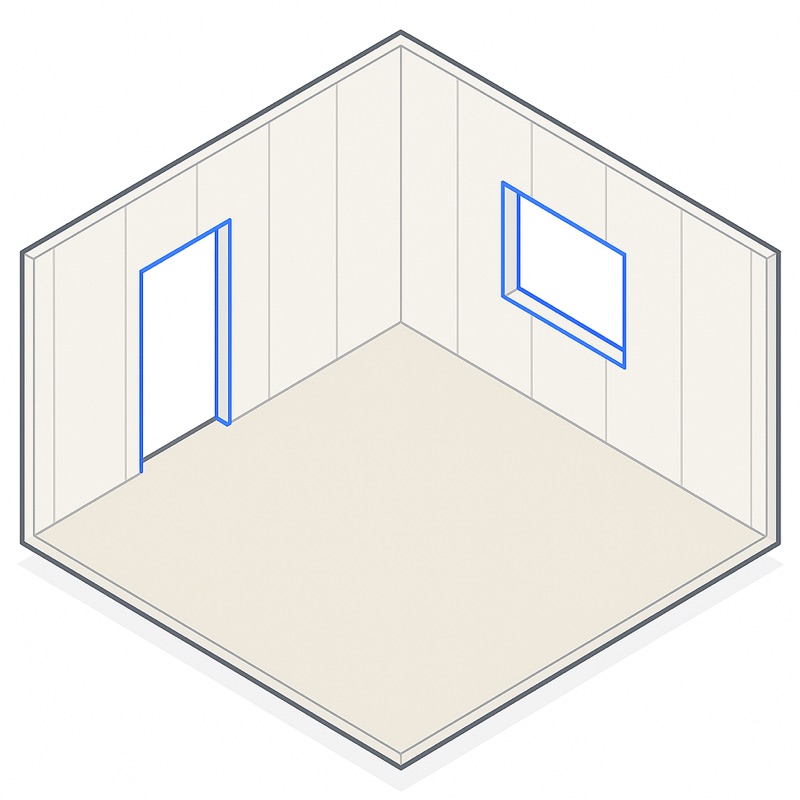
Isometric illustration of an empty room with drywall installed on walls and ceiling, with door and window openings

Updated USG/National Gypsum + IRC R702 sourced Methodology Sheet-count lookup

Quick presets โ€” click to load typical room values:

Wall Area (sq ft)
โ€”
Ceiling Area (sq ft)
โ€”
Total Area (sq ft)
โ€”
Wall Sheets Needed
โ€”
Ceiling Sheets Needed
โ€”
Total Sheets (incl. 10% waste)
โ€”
Joint Compound
โ€”
Paper Tape
โ€”
Drywall Screws
โ€”

Mud and tape figures use industry-standard rates (~0.053 gal compound and ~5 ft tape per sheet); actual usage varies with finish level. For estimating only.

Live wall + ceiling layout

Updates as you change inputs. Wall elevation on left with door/window openings. Ceiling top-down on right.

Yellow tiles = drywall sheets (staggered) ยท Brown = door ยท Light blue = window ยท Gray dashed = stud lines @ 16โ€ณ OC

๐Ÿ“ Fraction โ†’ decimal helper (tape measure conversions)
1/16 = 0.0625
1/8 = 0.125
3/16 = 0.1875
1/4 = 0.25
5/16 = 0.3125
3/8 = 0.375
7/16 = 0.4375
1/2 = 0.5
9/16 = 0.5625
5/8 = 0.625
11/16 = 0.6875
3/4 = 0.75
13/16 = 0.8125
7/8 = 0.875
15/16 = 0.9375
1 = 1.0

Type the decimal value into any input above. Example: 8-1/2 ft ceiling = 8.5 ; 12-1/4 ft length = 12.25.

Anatomy of a Finished Wall

What's actually between the studs and the paint. Cross-section through a typical interior wall, showing every layer.

2ร—4 stud 16โ€ณ OC actual 1.5ร—3.5 Drywall 1/2โ€ณ standard Screw 1-5/8โ€ณ countersunk Mud + tape 3 coats over paper tape Primer + paint 2โ€“3 coats Baseboard Insulation batt or blown-in Top plate
Standard interior wall section. The visible face is just 1/2โ€ณ thick; everything else is what gives the wall structure and insulation.

Best Practices โ€” Thickness, Screw Pattern, Orientation, Waste

Four reference scales for the drywalling decisions you actually make on every project.

Drywall thickness by use 1/4โ€ณ overlay on existing drywall, curved walls 3/8โ€ณ repair patches, single-layer re-drywalling (less common) 1/2โ€ณ interior walls + ceilings (standard residential) 5/8โ€ณ X Type X fire-rated โ€” garages, furnace rooms, ceilings (sag resistance) 1/2โ€ณ MR moisture-resistant "green board" โ€” bathroom non-wet areas Screw pattern (per IRC R702 + GA-216) single 4ร—8 sheet Field screws: 16โ€ณ OC along each stud Edge screws: 8โ€ณ OC along sheet edges Ceilings: 12โ€ณ OC (or per joist spacing) ~32 screws per 4ร—8 sheet Sheet orientation โ€” horizontal beats vertical for residential horizontal โ†’ fewer butt seams โ†’ stronger wall (sheets span โ‰ฅ3 studs) โ†’ easier to finish (taper-to-taper joints at chest height) vertical OK if wall โ‰ค 8 ft and continuous floor-to-ceiling used for tall narrow walls or panels around openings Waste factor: 10% rectangular rooms ยท 15% rooms with many angles/openings ยท 20% complex basements, dormers

Drywall Types โ€” Which to Use Where

Five drywall variants. Standard 1/2โ€ณ is the default; the others solve specific problems.

1/2โ€ณ standard white Standard interior
Standard 1/2โ€ณ. Default for all interior walls and ceilings. White paper face, gypsum core. ~54 lb per 4ร—8 sheet.
5/8โ€ณ Type X FIRE-RATED Garage, furnace
5/8โ€ณ Type X. Fire-rated (1-hour). Required by code on garage walls/ceilings adjacent to living space and around furnaces. Also resists ceiling sag on 24โ€ณ OC joists.
1/2โ€ณ MR "green board" Bathrooms (dry areas)
Moisture-resistant. Wax-treated paper. For bathroom walls and laundry rooms away from direct water. Not for inside tub/shower surrounds.
1/2โ€ณ cement board Tile backer (wet areas)
Cement board. Not technically drywall โ€” Portland cement core. For tub/shower surrounds and tile floor underlayment. Brand names: Durock, HardieBacker, WonderBoard.
1/4โ€ณ overlay Curved walls / patches
1/4โ€ณ overlay. Flexible enough to bend around curved walls and archways. Also used as a patch over existing damaged drywall. Not structural.

Installation Details โ€” Joints, Corners, Screws

Three details that decide whether the wall looks pro or like a DIY weekend.

3 coats of mud over paper tape tapered edge + tape feathered out 10โ€“12โ€ณ TAPED JOINT
Taped joint. Press paper tape into wet mud, knife smooth, dry. Second coat feathered 6โ€“8โ€ณ wider; third coat 10โ€“12โ€ณ wider. Sand between. Done well = invisible.
metal corner bead L-profile, fastened with staples or screws every 6โ€ณ OUTSIDE CORNER BEAD
Corner bead. Metal L-profile protects the outside corner from impact and gives a perfectly straight edge to mud against. Plastic and paper-faced versions also work.
field 16โ€ณ OC edge 8โ€ณ OC SCREW PATTERN (single 4ร—8 sheet)
Screw pattern. 16โ€ณ OC down each stud (field) plus 8โ€ณ OC along sheet edges. Countersink just below paper surface โ€” don't break the paper. ~32 screws per 4ร—8 sheet.

How the Drywall Calculator Works

This drywall calculator estimates the number of sheets needed for a room by computing the total net wall area. It multiplies the room perimeter (2 ร— (length + width)) by the ceiling height to get gross wall area, then subtracts 21 sq ft per standard door (3ร—7 ft opening) and 15 sq ft per average window (3ร—5 ft). If you check "Include Ceiling," it adds the floor area (length ร— width). Total net area is divided by the sheet size โ€” 32 sq ft for standard 4ร—8 panels, 48 sq ft for 4ร—12 โ€” then a 10% waste factor is applied to cover cuts around corners, outlets and seams. Drywall is sold by the sheet and cannot be returned in partial quantities, so always round up to the nearest whole sheet.

Drywall Thickness Guide โ€” Which to Use Where

Thickness Weight (lb/sheet) Best Use Notes
1/4 in~13 lbCurved walls, overlay on existing drywallNot a structural layer
3/8 in~20 lbRepair patches, single-layer re-drywallingLess common today
1/2 in~54 lbInterior walls and ceilings (standard)Most common residential choice
5/8 in Type X~70 lbGarages, fire-rated assemblies, ceilingsRequired by code in many garage-to-living applications
1/2 in moisture-resistant~55 lbBathrooms, laundry rooms (non-wet areas)Green board โ€” not for direct water contact
1/2 in cement board~65 lbTile backer in wet areas (showers, tub surrounds)Not drywall โ€” cement-based backer board

Quick Reference โ€” Sheets Needed by Room Size

Room Size Ceiling Height 4ร—8 Sheets (walls + ceiling) Notes
10ร—10 (bedroom)8 ft~14โ€“161 door, 1 window
12ร—12 (bedroom)8 ft~16โ€“181 door, 2 windows
12ร—16 (living room)8 ft~20โ€“221 door, 2 windows
20ร—20 (garage)9 ft~38โ€“421 large garage door, 1 door
24ร—24 (basement)8 ft~52โ€“582 doors, 4 small windows

Pro tips: Order walls and ceiling drywall separately so you can use 5/8-inch Type X on ceilings (better sag resistance on long spans) and standard 1/2-inch on walls. Buy 5โ€“10% extra for mistakes โ€” most big-box stores won't take back cut sheets. Use 4ร—12 sheets on 9-foot walls to eliminate the horizontal seam mid-wall.

Frequently Asked Questions

How many sheets of drywall do I need for a 12ร—12 room?
A 12ร—12 room with 8-foot ceilings, 1 door and 2 windows needs approximately 16โ€“18 sheets of 4ร—8 drywall (walls and ceiling combined, including 10% waste). Use our calculator above for your exact dimensions.
How many square feet does a sheet of drywall cover?
A standard 4ร—8 sheet covers 32 sq ft. A 4ร—12 sheet covers 48 sq ft. After applying a 10% waste factor, effective coverage is about 29 sq ft per 4ร—8 sheet and 43 sq ft per 4ร—12 sheet.
Should I use 4ร—8 or 4ร—12 drywall sheets?
4ร—8 sheets are easier to handle solo and work well for 8-foot walls. 4ร—12 sheets are better for 9-foot or 10-foot walls because they eliminate the horizontal butt seam at mid-wall height, which is the hardest seam to finish invisibly. The trade-off is weight โ€” 4ร—12 sheets are harder to lift and maneuver.
What thickness drywall should I use for walls?
1/2-inch drywall is the standard for residential interior walls and ceilings. Use 5/8-inch Type X in garages (especially walls/ceilings adjacent to living space โ€” required by most building codes), around furnaces, and in fire-rated assemblies. 3/8-inch is only for repairs or overlay work.
How do I calculate drywall for a ceiling?
Ceiling square footage = room length ร— room width. Divide by 32 (for 4ร—8 sheets) or 48 (for 4ร—12), then multiply by 1.10 for 10% waste. Example: a 12ร—16 ceiling = 192 sq ft รท 32 = 6 sheets ร— 1.10 = 6.6, round up to 7 sheets.
How much waste should I add when ordering drywall?
Add 10% for a straightforward room with few cuts. Add 15% for rooms with many angles, archways, or complex ceilings. A basement with multiple rooms and utility penetrations may warrant 15โ€“20% waste. It is always cheaper to over-order than to make a second trip or wait for delivery.
What kind of drywall should I use in a bathroom?
Use moisture-resistant drywall (commonly called "green board") on non-wet bathroom walls โ€” around vanities and above the tub surround. Never use standard drywall in a bathroom. For wet areas inside a shower or tub surround, use cement backer board (like Durock or HardieBacker) behind the tile โ€” regular or green board will eventually fail with direct water exposure.
How many screws do I need per sheet of drywall?
Plan for approximately 32 screws per 4ร—8 sheet โ€” screws every 16 inches on studs (field screws) and every 8 inches along edges. For a full room, multiply your sheet count by 32โ€“36 screws. Buy a 5-lb box of 1-5/8-inch coarse-thread screws per 25โ€“30 sheets.
Can I hang drywall by myself?
Walls: yes, with a drywall lift or T-brace for support. Ceilings: very difficult solo โ€” rent a drywall lift (about $40โ€“60/day). Ceiling work is the most physically demanding part of any drywall job. Two people can hang a room significantly faster and with fewer cracked corners.
How do I estimate drywall mud and tape?
A rough rule: one 4.5-gallon bucket of all-purpose joint compound covers approximately 100 linear feet of seam in one coat. Plan for 3 coats total. For tape, estimate 1 roll (250 ft) per 8โ€“10 sheets. Corner bead: count your outside corners and buy one 8-foot piece per corner.